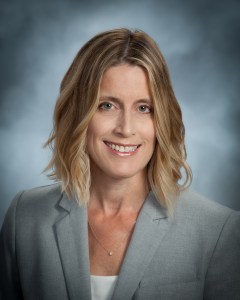
Gwen Shuit will retire as CEO of Friendship Communities on November 30. She has been with the organization for over 11 years.
Prior to her service with Friendship Communities, she also served as Healthcare Administrator at Willow Valley Retirement Communities and as NHA Administrator, VP at Tel Hai Retirement Community.
Shuit received her BSN in Nursing, and M.Ed in Education from Widener University. She also received an NHA in Administration from Millersville University of Pennsylvania.
MHS commends her for her career of service and we hope she has a happy retirment.
The COVID-19 pandemic seems to be the catalyst to the disruptions within the global supply chain, but it is not the only contributing factor for these ongoing shortages. There have been several supply chain interruptions within the past 18 months, such as the logistical conundrum of the Suez Canal blockage, the freight backlog and plastic resin production stoppage of the Winter Storms in the Gulf Coast and the computer hacking that shut down the fuel flow through the Colonial Pipeline. And now, the Chinese manufacturers are reducing production capacity due to the electricity shortage and the United States continues to struggle with the labor market. With the magnitude of these disruptors within the global supply chain, manufacturers continue to struggle to meet the increasing demands due to the raw material shortages, difficulties with transportation, price increases and the labor shortage.
Conditions continue to evolve around our manufacturer and distributor’s product cost and the direct impact of elevated expenses, relative to container costs, logistics, labor, and raw materials. Along with outside sourcing, many have purposefully established an approach to offset a portion of these costs. Each segment surrounding these direct impacts is outlined below:
Shipping/Container costs – More than 18 months into the pandemic, the disruption to global supply chains is worsening, spurring shortages of consumer products, and making it more expensive for companies to ship goods where they are needed. Furthermore, shipping companies expect the global adversity to continue. This has considerably increased the cost of moving cargo and adds to the pressure of consumer prices.
The World Container Index shows that the composite cost of shipping a 40-foot container on eight major East-West routes hit $9,613 in the week to August 19, up 360% from a year ago. The biggest price jump was along the route from Shanghai to Rotterdam in the Netherlands, with the cost of a 40-foot container soaring 659% to $13,698. Container shipping prices on routes from Shanghai to Los Angeles and New York have also jumped.
There is port congestion, both in the US and China, continued COVID outbreak in factories, and challenges procuring containers.
Logistics – Most foreign countries have serious shut down rules for Covid-19. When this occurs, containers are trapped within those countries or vessels will skip certain ports to prevent being hung up. This has continued to cause severe backlogs at US ports.
Other events that have occurred in major supply chain routes; The Evergreen stuck in the Suez Canal, water shortage in the Panama Canal, typhoon at Shanghai port and the latest hurricane in the Gulf have added to the strain.
Labor – America is confronted with a labor shortage, which in turn, has affected productivity. However, employee costs are the focus of how labor is affecting the workplace. Compensation benefits, wage and salary increases, and benefit costs are essential factors in product manufacturing and substantially impact the costs to market.
According to the U.S. Bureau of Labor Statistics, employer costs for employee compensation for civilian workers averaged $38.91 per hour worked in June 2021. Wage and salary costs averaged $26.85 per hour worked or 69% of total compensation, while benefit costs were $12.06 or 31% of total compensation. The average cost for health insurance benefits was $3.09 per hour worked or 8% of total compensation. (U.S. Bureau of Labor Statistics, September 2021)
Raw Material – Significant raw material price increases due to force majeures, supply constraints, along with demand spikes has produced a very tight raw material market.
Force Majeures apply to all suppliers, most are due to acts of nature – freeze, flood, fire, mechanical issues, or shortage of their feedstocks. To get around contracted prices, suppliers are coming forth with surcharges to cover their additional costs. Usually, our distributors have the benefit to shop around if suppliers impose a surcharge, but supply is tight globally in many commodities.
To mitigate additional charges, many distributors push back on all supplier price increases, and explore multiple sources and imports. Also, reviewing substitution products while striving to maintain quality.
This year has been quite a process, with raw material increases over the past year being up over 50%, shortages of staffing, Covid shutdowns, plus the container shortage that has driven the freight costs up exponentially.
As a CPS member, you don’t have to experience the supply chain challenges alone. If you need assistance, reach out to your dedicated client account manager, Erica Azarigian (203-314-9777 or azarigianerica@carepurchasing.com) to explore if there is an alternative option available.
Educational Assessment Guidelines Leading toward Excellence (EAGLE) has gained recognition in recent years as the only faith-based accrediting body in the country. It focuses on ministries serving older adults, children, youth and families, and developmentally disabled persons. EAGLE’s ten principles place emphasis on service and operational excellence, quality and how applicant organizations incorporate their Christian mission, heritage and values throughout the organization and its daily operations.
Since 1984, EAGLE accreditation has incrementally evolved as a voluntary, self-assessment, consultative, peer review program for faith-based organizations. In 2018, the EAGLE Accreditation Program was recognized by the federal Department of Health and Human Services as an approved accreditor for Qualified Residential Treatment Programs (QRTP) under the Family First Prevention Services Act (FFPSA). The EAGLE Accreditation Program is led by the EAGLE Accreditation Commission and operated by the United Methodist Association of Health and Welfare Ministries (UMA). For more information on EAGLE accreditation, please visit the EAGLE website at http://eagle1.org/ or email eagle@ouruma.org.
The MHS Board is seeking nominations for three Board positions that will open at the end of March 2022. The Board meets three times per year, in-person two times per year at locations near MHS member organizations, and one time per year via zoom.
If you are interested or know of someone that would be able to fill these Board positions, please submit the name for consideration. Board member nominations will be considered by the MHS Board Nominations Committee and then formally approved at the MHS Members’ meeting at Mennonite Health Assembly in Greenville, SC. The four-year term begins April 1, 2022, and is open to CEOs and board chairs of MHS member organizations.
For more information or to submit a nomination, please contact karen@mhsonline.org by January 7, 2022.
MHS will offer the Miller-Erb Nursing Scholarship and the Elmer-Ediger Memorial Scholarship for 2022-2023 school year. The application period for both scholarships is January 1through March 15, 2022.
The Miller-Erb Nursing Scholarship is for $2,500 and will be awarded to two eligible students pursuing a bachelor of science in nursing.
The Elmer-Ediger Memorial Scholarship is for $3,000 and will be awarded to four eligible students in programs of study in the field of behavioral health or developmental disabilities.
Applicants must be full time in their sophomore or junior year of college at time of application with a GPA of at least 2.5 on a 4.0 scale. United States and international students may apply.
Preference will be given to those applicants with financial need who attend an Anabaptist college, university or church or work for an MHS Alliance Member Organization. Visit the MHS website at www.mhsonline.org/grants-&-scholarships for more information on eligibility and selection criteria as well as links to the application forms.
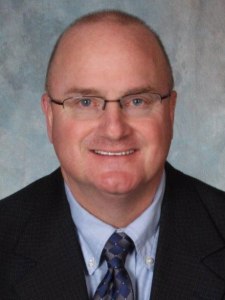
Jeffery D. O’Neal, MBA, LCPC, FACHE, began as the new CEO at Brook Lane on October 18.
Prior to this, Jeffery was with UPMC Western Maryland for 17.5 years, with 12 years as System Director of the Behavioral Health Service Lines, and and the past 5 years as the Executive Director of Clinics, Practices and Behavioral Health Services.
He has been in the Behavioral Health field for 33 years. Jeffery is also a Licensed Clinical Professional Counselor, a National Certified Counselor, a Certified Employee Assistance Professional, and is a Fellow of the American College of Healthcare Executives.
Jeffery is looking forward to, “Continuing my career with Brook Lane in a faith based program, where I am given the opportunity to serve the Behavioral Health and Educational needs of my local community.”
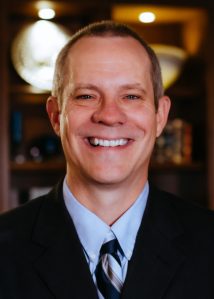
Karl Brummer started as the new President and CEO at Messiah Lifeways in September.
Prior to this role, Karl served as Senior Vice President. Before coming to Messiah Lifeways, Karl was the Senior Executive Vice President for Cross Keys Village, a neighboring Continuing Care Retirement Community (CCRC). Before working in long-term care, Karl has worked in several domestic and international organizations, primarily in HR leadership roles, in the fields of technology, manufacturing, and professional services.
Mr. Brummer has a Bachelor of Science degree in Human Resource Management from Messiah College and a Masters in Business Administration from Kutztown University. He holds his Senior Professional in Human Resource (SPHR) certification from the Society for Human Resource Management as well as several other certifications in human resources, staffing, and senior services.
In addition to his role at Messiah Lifeways, Karl serves as an adjunct instructor at several local colleges and universities where he teaches graduate and under-graduate classes in strategic planning, leadership, human resources, international business, and business ethics. Karl has served on the General Conference Board for the Brethren in Christ denomination, Carlisle Brethren in Christ Church (The Meeting House), a local denominational foundation, and is active in his local community. He, his wife and two daughters live in Carlisle, PA.
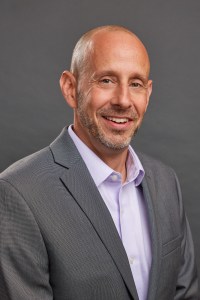
Linda K. Lownsbery, of Elizabethtown, Pa., has been named the new Vice President of Human Resources at Landis Communities. Most recently she served as Vice President of Human Resources for The Wenger Group, Inc., where she led Human Resource functions for an organization of nearly 500 employees.
President/CEO Larry Zook commented, “From our beginning we have been blessed with a competent, caring and compassionate team motivated by Christ-like love. Our HR leadership has supported this over the years through cultivating a strong culture of service and building a team of individuals committed to Landis Communities mission and values. We are excited to welcome Linda to the team to continue this important work. Linda brings strong HR leadership experience, along with an interest in and passion for our service to older adults in the Lancaster County area and beyond.”
Linda’s extensive experience will be an asset to Landis Communities. Her previous roles have included all aspects of Human Resources management including leading a full range of efforts in talent development, employee relations, performance management, leadership development and succession planning. She has also worked to initiate innovative efforts for talent recruitment and retention, conduct comprehensive talent assessment and leadership development, and lead initiatives designed to keep a values-based culture strong.
Linda graduated with a B.S. in Business Administration (cum laude) with a Marketing/International Business concentration and a minor in Spanish from Elizabethtown College. She holds a Graduate Certificate in Training and Development from Penn State University. In addition, she carries SPHR and SHRM-SCP certifications.
Linda says, “I am so grateful for the opportunity to serve in an organization where team members living out the organization’s guiding values is so evident.”
Landis Communities grows out of the nearly 60-year history of Landis Homes Retirement Community and is committed to following God’s call to creatively serve the diverse needs and interests of older adults by developing opportunities and collaborative relationships. It is committed to keeping retirement living strong and vital; to providing a number of affordable living options, including new models of age 55+ active adult living; to provide services at home – supporting aging in place, and to developing creative partnerships in support of all of these areas. LandisCommunities.org
Adriel School, Inc. has been reaccredited by the Council on Accreditation (COA) as of October 1. In addition, Adriel School, Inc. was expedited through the Pre-Commission Review Report (PCR) process as a result of not receiving any out-of-compliance ratings in any of the fundamental practice standards.
Only 26 % of employees strongly agree that feedback helps them do better work
Only 2 out of 10 managers know how to coach employees.
87% of Millennials list professional growth and development opportunities as important in their job
The pressure to retain our employees continues to mount. Large numbers of the workforce are leaving organizations for better opportunities, more flexibility, better work life balance, and higher pay. This dynamic requires leaders to dedicate more time and resources to their team members in an effort build an environment that people desire, and lead to improved retention. Studies continue to show that developing an engaged workforce produces better outcomes and motivates people to stay in their current jobs.
A strategy that is often overlooked in improving engagement and retention is utilizing coaching with team members. Coaching is not the same as managing and requires different skills and a reset of the way managers relate to people. While many managers may feel they are coaching their team members, research shows that most managers are not effective coaches. In a recent study, Gallup found that only 20% of managers know how to coach employees.
So, what is coaching? And how can we incorporate that approach into our organizations?
At the core of coaching is regular, consistent dialogue between supervisor and employee. This two-way communication allows for each person to share how things are going from their perspective. The supervisor does less directing, instead focusing on asking open-ended questions that allow employees to share and find the answers. Feedback that is given by the manager is in real-time, direct and simple. Coaching should focus on development and not evaluation.
Organizations interested in incorporating a coaching approach to leadership should first focus on managers. Providing training on coaching techniques is key and will help managers feel more comfortable in using this approach. Secondly, organizations must examine current processes and systems for feedback. Our old methods, such as established timeframes for evaluations, do not fit into a coaching mindset. Third, managers must be given the time to spend with their teams. Evaluating their workload to determine whether they have enough time for building effective relationships and providing frequent, productive feedback is critical. Too often managers are required to complete too many routine tasks. Or they have to supervise so many people that it isn’t feasible to connect regularly with each of them. And finally, managers must understand the expectations and be held accountable for using this new approach.
Retention continues to be one of the greatest challenges that organizations face. Our ability to fulfill our mission and purpose requires having a stable, engaged workforce.
Coaching is one approach that should be considered as you develop your retention strategies. The focus on relationships, positive feedback and personal development has the potential to engage your people and motivate them to stay.




 eConnections