Categories
2020 August

September Webinar: Strategies for Engaging Philanthropy During a Pandemic

September 24, 2020 at 2:30 p.m. Eastern

Many organizations have had to give up or alter their fundraising events in order to adapt to the reality of the Covid-19 pandemic. It can be a struggle to make digital events as inviting and participatory as ice cream socials or golf outings. In this webinar session, MHS is pleased to host David King, of David P. King Fundraising Counsel, LLC. David brings over 25 years of experience helping non-profits succeed in finding and capitalizing on opportunities to drive fundraising. He will share practical tools and best practices for engaging strategies for philanthropy during the pandemic.

Register for this free webinar today.

Categories
2020 August

Can Technology Assist With Social Isolation?

Dianne Piet, your MHS dedicated CPS Client Account Manager

Social isolation is one of the biggest threats to the health of America’s senior citizens and adults with developmental disabilities. It is always a concern for residential communities, but even more so now that communities across the nation have already been enforcing “social distancing” measures for several months and there is no known end to the Coronavirus (COVID-19) Pandemic. Communities are continuing to seek technology resources to fulfill the residents core needs, personalized engagement and social connections.

Reviewing and implementing new technology is hard. As you look at specific technology areas, you shouldn’t have to do it alone. Learn from other communities, as CPS shares insights on how other communities responded to different technology solutions, their satisfaction with the solutions, magnitude of costs and technical requirements. Click here to learn the different technology solutions reviewed amongst the communities – resident portals, smart voices, brain fitness, virtual reality and hearing augmentation.

Dianne Piet, your MHS dedicated CPS Client Account Manager, will assist you with the technology that delivers the solution that’s right for your community. Give Dianne a quick phone call at 603-935-7923, or email her at pietdianne@carepurchasing.com, to start exploring the technology options.

Categories
2020 August

Everything DiSC

MHS Consulting has become an Everything DiSC partner.  In addition, Jeremy Kauffman has become a certified DiSC trainer. With this new partnership, MHS Consulting has access to the full array of DiSC assessments. Using these tools, MHS Consulting can help increase awareness of each person’s natural leadership style and develop and implement strategies to increase competency and effectiveness.  This work can be done on an individual level or with management teams within an organization.

To learn more about how MHS Consulting can assist in developing your leadership skills or those of your team contact Jeremy Kauffman.

Categories
2020 August

2021 Inflation Estimates Guide

To help you prepare for 2021 budgets, MHS partner, CPS is providing guidance for price increases expected in the coming year.

Primary factors to consider when budgeting for purchasing include:

  • Historical price increases
  • Impacts to local, regional, national, and international markets
  • Input from vendors

For a well-rounded approach, CPS considers all of the above factors. Plus, 2021 will have additional complexity due to the uncertainty surrounding COVID-19 and its impact on our vendors and the economy.

The attached guide can be used to help in planning your 2021 budget whether you are a CPS member or not. CPS is the purchasing service partner that is available to all MHS members, Give Dianne Piet, your MHS dedicated CPS Client Account Manager, a quick phone call at 603-935-7923, or email her at pietdianne@carepurchasing.com, to find out if CPS can save you money.

Categories
Press Release

FOR IMMEDIATE RELEASE

Leaders of Faith-Based Aging Services Organizations Urge Congress to Deliver Life-Saving COVID Relief for Vulnerable Older Adults and Caregivers

MHS Joins 10 Groups Representing More than 5,000 Organizations Across Numerous Religions and Denominations Urge Congress to Find Common Ground   

Contact: Chris Rahe, chris@mhsonline.org

July 29, 2020, Washington DC – As Congress negotiates the next COVID relief package, ten associations of faith-based and mission-driven aging and disability service providers joined with MHS  to demand that lawmakers include comprehensive relief measures to safeguard older adults and care workers.

In a letter today to Congress and the Administration, they outline the crucial resources for all providers and staff who care for older adults, based on national aging services association LeadingAge’s Five Essential Actions. Find your elected representatives here to contact them and urge them to support the Five Essential Actions.

“Today we are coming together to urge you to find common ground, and deliver the life-saving relief we need to continue fulfilling our historic role in the lives of so many Americans,” they said in the letter. “It is not acceptable to continue on as we have been for months. This is a full-fledged crisis like we’ve never seen before that will only worsen in the crucial days and months to come.”

“We are aligned in our ardent belief that the actions you as leaders of our country take in the next weeks will determine the life and death of many of our nation’s most vulnerable older adults,” the letter continues, “This is an historic moment. It must be met with historic action. Older adults deserve nothing less.”

Collectively the organizations represent over 5,000 organizations based on a range of faiths and denominations, including Catholics, Jews, Lutherans, Methodists, Mennonites, United Church of Christ and Church of the Brethren, Presbyterian, and Quakers.

The letter notes that nearly 100,000 people over 65 have died from COVID-19 in recent months, and that the virus has been most deadly for older people of color, and nearly half of all COVID-19 fatalities have been nursing home residents and staff. 

“We need Congress and the White House to agree to a bipartisan solution that protects residents and staff at the nation’s senior living facilities, including many MHS members,” said Karen Lehman, MHS President/CEO.

Lehman was joined in the letter by 10 leaders of associations of faith-based and mission-driven aging and disability service providers:

Don Shulman
President & Chief Executive Officer
AJAS
Sr. Mary Haddad,
RSM President and CEO
Catholic Health Association of the United States
Michael J. Readinger
President/ CEO
The Council for Health & Human Service Ministries
David Lawrenz
Executive Director
Fellowship of Brethren Homes
Jane Mack
President & CEO
Friends Services Alliance
Charlotte Haberaecker
President & CEO
Lutheran Services in America
Cynthia L. Ray, M.Div
Executive Director
Presbyterian Association of Homes & Services for the Aging
Reuben D. Rotman
President & CEO
Network of Jewish Human Service Agencies
Katie Smith Sloan
President and CEO
LeadingAge
Mary Kemper
President & CEO
United Methodist Association of Health & Welfare Ministries
Categories
2020 July

Considering the Role of the Board and the Role of the CEO

by Karen Lehman, President/CEO

A collaborative and trusting relationship between the board and the chief executive is an important indicator of a healthy board and organization.  Cooperation, transparency, accountability, respect, and frequent communication are foundational for creating a positive board and chief executive relationship.

I am often asked to clarify the role differences between the board and chief executive.  Boundaries can become unclear, particularly when the organization goes through a transition or has difficult times.  Each are expected to have leadership knowledge and experience, both have a high level of responsibility, and both the chair and the chief executive are held at the highest level of accountability in the organization.  It’s very important to know what is expected in each role and stay as much in your lane as you can! 

BoardSource has a one-page checklist of the board role and responsibilities that is to the point. Essentially, the board is responsible for:

  • Establishing identity and direction (strategic plan, mission & vision statement, budgets, etc.)
  • Ensuring the necessary resources (fundraising, board recruitment/succession planning, chief executive performance, stakeholder input, etc.)
  • Providing oversight (outside auditor contract, risk management policies, achievement of goals, financial oversight, chief executive review, etc.)
  • Board operations (board assessment, board policies, committee work, board agendas, etc.)

The board hires the chief executive and delegates the daily management of the organization to that person.  This is typically the only position that the board hires and is responsible for their performance and compensation.  The key to this relationship is communication.  The chief executive must keep the board informed about the issues and activities in the organization.  The board monitors the organization’s reporting such as financial reports that provide financial ratios and budget goals, operational dashboards and other reports that provide information on risk management, quality, surveys, etc.  There are continual checks and balances – listening, evaluating and matching what is reported along with the data and reporting.

The board is responsible for the overall health and success of the organization. The chief executive is also responsible for the same, but their focus is on the operational aspects they are managing such as the right leadership, the best systems, proper procedures, etc., while the board focuses on the results and outcomes; looking at what the data says, achieving strategic goals, obtaining financial balances, fundraising goals, etc.

Over time, board and executive leadership practices and relationships turn into organizational culture.  These cultural expectations, whether good or not so good, are often hard to change and typically are not addressed until there is a transition in either the board chair or chief executive role. Experience tells us that there are many grey areas in the board and chief executive roles and while there are best practices to be followed, there is no one right way to govern an organization and is hopefully a relationship that is always open for learning and growth. 

Together the board and chief executive’s roles are to advance the mission and strive to achieve the vision of the organization.  This requires a healthy culture and trust that allows for testing responses, verifying information and the ability to challenge assumptions. 

There is no greater sense of achievement that boards and chief executives can have when their work results in high stakeholder satisfaction, low employee turnover, meeting financial targets, providing high quality service/care and reaching strategic goals.  This can only happen when there is high trust between the board and the chief executive, and together they have a passionate mutual commitment and focus on the mission. 

MHS supports your work in strengthening the board and chief executive’s work by providing faith grounded tools and resources.  We serve and support you in advancing your effectiveness, and ultimately your mission!  For more information about our board and chief executive assessment tools please contact Twila Albrecht, MHS Program Associate.


Categories
2020 July

Putting a Stop to Office Bullying

by Twila Albrecht and Chris Rahe

Whether overt or subtle, abrasive or silent, bullying can follow us from the school yard into the workplace.

According to Forbes magazine, workplace bullying affects 75% of workers.“Workplace Bullying is repeated, health-harming mistreatment of one or more persons (the targets) by one or more perpetrators. It is abusive conduct that is: threatening, humiliating, or intimidating, or work-interference, i.e. sabotage, which prevents work from getting done,” from Workplace Bullying Institute.

It’s not just a personnel issue, it is estimated to cost the nation’s businesses $450 to $500 billion in revenues annually.

As reported by business.com, less than 20% of employers will help a bullied target, leaving 65.6 million victims without much recourse—other than, for 61% of them, leaving their job in order to escape the resulting emotional stress and suffering.

Bullying behaviors are common and can show up in the following ways:

  • Offensive communication – mocking, use of profanity, discrimination, yelling, silence (no open communication)
  • Belittling or demeaning someone’s work or ideas
  • Embarrassing someone publicly or talking about them behind their back
  • Blocking the advancement or growth of an employee
  • Isolating or excluding someone from activities or meetings
  • Setting unrealistic expectations or workloads so employees continually feel they have failed
  • Taking credit for another’s work and/or not giving credit where credit is due
  • Distorting the truth to promote your own agenda  
  • Creating unhealthy competition between employees by pitting them against each other
  • Disregard for staff well-being

Some of the items on this list are patterns that take place over a long period of time, and can go on undetected. Staff who are bullied often feel they don’t have the resources they need to fix their situation, so they feel stuck, and ultimately most leave the organization if there is no intervention.  This can result in high turnover rates for organizations where toxic workplace environments and/or processes are not addressed.

What can you do to make sure this toxic culture doesn’t infect your workplace? While incremental changes to policies and structures of communication are crucial, those of you in leadership positions can set the tone of your workplace. According to Training Magazine, Bullying would dramatically decrease if leaders would first openly and formally make aggressive or abusive conduct unacceptable. Here are some practical tips on how to minimize the issue:

  • Develop a formal code of conduct that:
    • Defines bullying in the workplace.
    • Educates staff on the negative effects of bullying on an individual and group’s morale and on the organization’s survival.
    • Raises awareness and responsibility of every group member.
    • Clearly defines penalties for non-compliance.
  • Create a “zero-tolerance” policy on the subject, comparable to zero tolerance for drugs, and enforce it at all levels without any exception.
  • Apply full transparency on the subject during staff meetings, while rewarding positive attitudes and discouraging/punishing bullying behaviors.
  • Ensure that executives manage by example, treating everyone fairly and with care, without exception—and condemning any bullying attitude.
  • Confront the bully without delay. Use a formal feedback form to report the perpetrator’s attitude and outline objectively any behavior that must change.
  • Train your HR staff to help people deal with bullying. Both the bully and his or her targets need to be educated, and procedures must be in place on how to deal with the issue.

Whether you are the target or have perpetuated bullying behavior, there are dozens of resources for handling a personal situation or influencing organizational change. Here are just a few for those ready to do the work:

*Although similar, bullying is different from sexual harassment or sexual abuse. If you are experiencing mistreatment in that way, seek professional and/or legal counsel.

Categories
2020 July

Lower Utility Bills to Offset COVID-19 Expenses?

Dianne Piet, your MHS dedicated CPS Client Account Manager

With the multifaceted utility rate structures, incentive programs, rebates, tax credits, industry specific billing codes, meter readings and more – utilities are complex! Extensive knowledge of the utility industry’s billing process, as well as the local and state programs, is essential to effectively review your utility bills. With this amount of complexity, a small overpayment can easily go unnoticed until it is incorporated into your monthly utility budget for many years. Care Purchasing Services (CPS) has utility vendors that can execute comprehensive utility bill audits, make and implement recommendations to reduce your future utility bills and receive refunds on past charges and deliver full service consultations.

Don’t let the process of selecting a vendor detour you from these utility savings. Give Dianne Piet, your MHS dedicated CPS Client Account Manager, a quick phone call and she will guide you to the vendor(s) applicable to your state and best suits your needs. Dianne Piet phone: 603-935-7923, email: pietdianne@carepurchasing.com.

Natural Gas, Electricity and Water

AUTA Corporation is an energy sales tax consulting firm. They specialize in establishing the lowest sales tax rate on natural gas, electricity, and water accounts for Profit and Non-Profit Communities. [Learn more…]

Titan Energy is an independent energy consultancy group with in-depth knowledge of energy procurement, demand-side management and on-site generation services. Titan Energy creates comprehensive energy management strategies backed by data to control and reduce energy costs. [Learn more…]

Utility Refund Agency is the leading bill review company with in-depth and insider knowledge of the utility billing process combined with a proprietary review process. [Learn more…]

Waste Management

Refuse Specialists (RS) is a full service waste and recycling resource that focuses on increasing hauler/recycler bill accuracy, elevating visibility, increasing operational efficiencies and reducing costs. We are not waste haulers ~ we manage waste contractors, applying a powerful Big-Data approach to get the best prices, secure favorable contractual terms, audit invoices electronically, and provide comprehensive reporting using the RS proprietary workflow management software, ProRefuse™, so you can better manage the waste aspect of your operations with ease. RS’ objective is to save you 30% or more on your trash bills. [Learn more…]

Categories
2020 July

Welcome New Leaders

The past few months have seen new leaders at several of our member organizations and we’d like to spotlight them here.

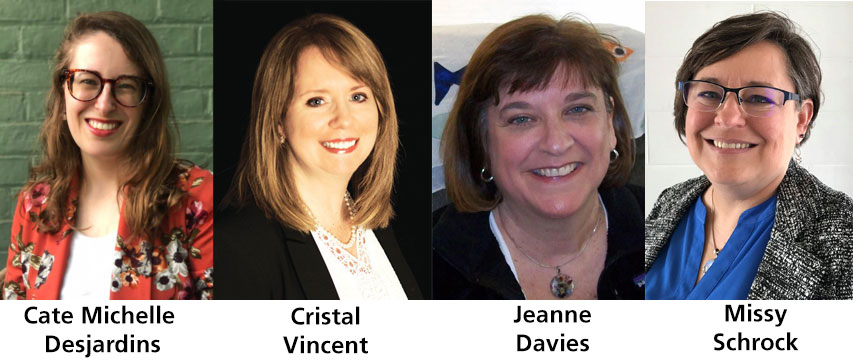
Cate Michelle Desjardins

Mennonite Healthcare Fellowship

Cate Michelle Desjardins, MDiv, MPH, began as Executive Director of MHF in May of 2020. Cate is passionate about integrating spirituality and faith into healthcare on all levels. For the past five years, Cate has served part-time as a pediatric specialist chaplain at Cincinnati Children’s Hospital Medical Center, where she both conducts research and provides clinical chaplaincy.

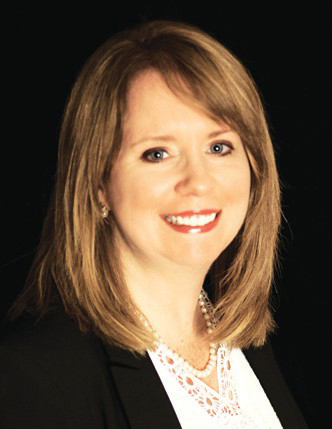
Cristal Vincent

Fairlawn Retirement Community

Cristal Vincent has been named the new chief executive officer of the Fairlawn Retirement Community. Vincent has more than 20 years of experience in health care, and has served as a licensed nursing home administrator for more than seven years. She was previously CEO for Heritage Manor Rehabilitation and Retirement Community and Levy Gardens Assisted Living in Youngstown.

Jeanne Davies

Anabaptist Disabilities Network

Jeanne Davies serves ADN as executive director. She has been with ADN for two years and previously served as program director. Jeanne has also served as a pastor and as denominational staff for the Church of the Brethren.

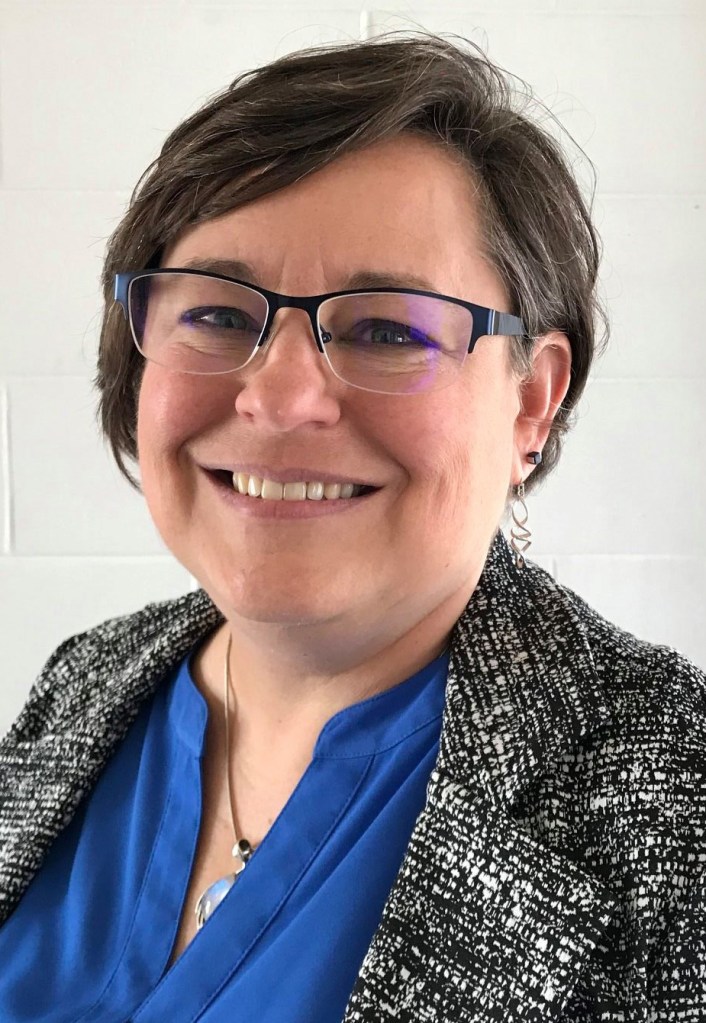
Missy Kauffman Schrock

Center for Healing & Hope

Missy Kauffman Schrock, MBA, began as Executive Director of the Center for Healing & Hope beginning March 6, 2020. Prior to accepting this position, Schrock worked as the Director of Giving at Greencroft Communities.

Categories
2020 June

MHS Statement on Racial Justice

“To do righteousness and justice
    is more acceptable to the Lord than sacrifice.”

Proverbs 21:3
artwork by Rafael Barahona

We at MHS express our profound sorrow over the senseless deaths in recent weeks of Ahmaud Arbery, George Floyd and Breonna Taylor. Once again, we are reminded of the many examples of racism and discrimination we continue to see in our communities. We also hear the legitimate frustration over a decades-long failure to reform police practices, and lament the ways that additional violence has occurred.

We recognize the deep pain and frustration of Black Americans caused by years of systemic injustice. We stand with our brothers and sisters and unequivocally proclaim that Black lives matter.

We commit to working toward a more just society by providing resources to our members that can help us work together long-term to undo the structures of systemic racism once and for all.

Design a site like this with WordPress.com
Get started