Categories
2020 August

COVID Exhaustion?

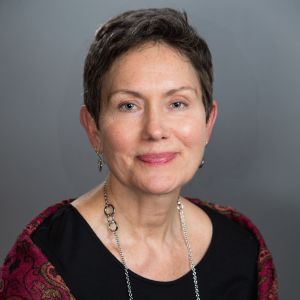
MHS President/CEO, Karen Lehman

Over these past weeks, I have become increasingly concerned about leadership burn-out.  I hear over and over words like “my team is exhausted” or “I really need a vacation but I can’t leave my team.” Operating in a 24/7 mode is difficult in the best of times, but these are the worst of times, and the constant vigilance to the pandemic is taking a toll on leaders.  Operating in a mode that requires persistent and unwavering focus without a healthy balance of personal care and rest is not only unsustainable, it is also poor role modeling to those we supervise and serve.

In their research, the Wellbeing Project  (co-created by several organizations, institutes, and a foundation to focus on catalyzing a culture of inner wellbeing for all changemakers) found that it was universally difficult for respondents they studied to distance themselves from their work.  People “closely identified with their roles and felt that working to exhaustion was still a badge of honor.”  Outcomes of their research supported that “organizations generally played a significant part in enabling a culture that was either supportive, or dismissive, of their inner well-being.”  Where do you and your organization fit on this continuum?  Do you tend toward being supportive or dismissive of well-being? 

I know that it is much harder to find work/life balance when you are a leader in a small organization.  There are fewer people to cross-train in order to support each other’s vacation and time away.  But the same problem exists in larger organizations as well.  It is easy, and dangerous, to position yourself as the only person who can handle the day to day implications of the pandemic.  This is both a hero and savior mindset.  In the long run, you will not be able to balance the daily or short-term needs of your organization with the long-term strategy and vision that is needed for sustainability if you are working in an exhausted or fatigued state.

It has been well proven that when a person takes time to rest, they are more empathetic, kinder, more open to ideas, more emotionally resilient, and have more energy and endurance.   It makes sense then that when leaders take time for themselves individually, it translates into a more positive organizational culture.  When you have succession planning in place, and have trained and cross-trained for key responsibilities, a culture of trust, cooperation and shared responsibility emerges.  It is always a sign of great leadership strength and depth when you can leave your office and know you have trustworthy colleagues and team members that can carry on without you. 

I’m hoping this message moves you to plan a vacation and time away from work!  But what are some steps that might be helpful to consider?  Document your most important work processes.  Get a commitment from your team on how vacation time will work and how responsibilities will be distributed and shared.  Most importantly, you have to learn to let go.  Know that every opportunity to let a key member of your team handle additional responsibility strengthens their leadership and offers opportunity for building self-confidence.  Working to exhaustion not only weakens you and your organization, it also sends a not so subtle message that you don’t trust others to take responsibility, and that you are irreplaceable.  What is the message that you are sending to your stakeholders by not taking time away? 

I love the title of the Wellbeing Project report; Wellbeing Inspires Welldoing: How changemakers’ inner wellbeing influences their work.  It sums up my message this month in a very succinct and poignant way.
Categories
2020 August

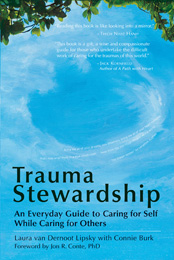
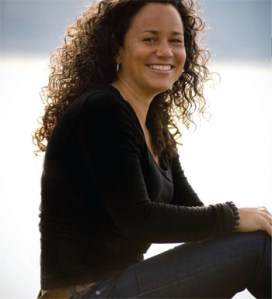
Author of Trauma Stewardship, Laura van Dernoot Lipsky, Will Speak At Our 2021 Mennonite Health Assembly

Laura van Dernoot Lipsky is the founder and director of The Trauma Stewardship Institute and author of Trauma Stewardship: An Everyday Guide to Caring for Self While Caring for Others and The Age of Overwhelm. Widely recognized as a pioneer in the field of trauma exposure, she has worked locally, nationally, and internationally for more than three decades.

Laura found her calling at age 18, when she regularly spent nights volunteering in a homeless shelter. She went on to work with survivors of child abuse, domestic violence, sexual assault, acute trauma of all kinds, and natural disasters.

A decade into her career, Laura experienced what can best be described as a near-psychotic break—which, she came to realize, was the result of years of witnessing and being intimately involved in trauma while lacking insight into how to sustain herself amidst such conditions. As a part of her attempt to come back from the brink, she began a journey of inquiry into the lasting effects on both individuals and communities of exposure to the suffering, hardship, crisis, or trauma endured by others.

The book, Trauma Stewardship, was written at the request of fellow colleagues.

Through word of mouth, Trauma Stewardship has sold more than 188,000 copies. From being referenced as part of a discussion on the plight of Pakistani writers in the New York Times to its inclusion in yoga-teacher trainings to it being required reading in more workplaces and educational institutions than can be listed, its influence has touched individuals and groups throughout the world. The book’s concepts continue to evolve under the rubric of The Trauma Stewardship Institute, which Laura established in 2011. In March 2015, Laura was invited to give a TED talk—one of the first delivered inside a women’s correctional facility.

Categories
2020 August

September Webinar: Strategies for Engaging Philanthropy During a Pandemic

September 24, 2020 at 2:30 p.m. Eastern

Many organizations have had to give up or alter their fundraising events in order to adapt to the reality of the Covid-19 pandemic. It can be a struggle to make digital events as inviting and participatory as ice cream socials or golf outings. In this webinar session, MHS is pleased to host David King, of David P. King Fundraising Counsel, LLC. David brings over 25 years of experience helping non-profits succeed in finding and capitalizing on opportunities to drive fundraising. He will share practical tools and best practices for engaging strategies for philanthropy during the pandemic.

Register for this free webinar today.

Categories
2020 August

Can Technology Assist With Social Isolation?

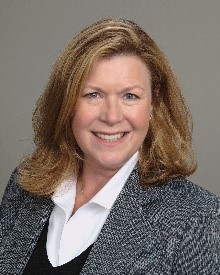
Dianne Piet, your MHS dedicated CPS Client Account Manager

Social isolation is one of the biggest threats to the health of America’s senior citizens and adults with developmental disabilities. It is always a concern for residential communities, but even more so now that communities across the nation have already been enforcing “social distancing” measures for several months and there is no known end to the Coronavirus (COVID-19) Pandemic. Communities are continuing to seek technology resources to fulfill the residents core needs, personalized engagement and social connections.

Reviewing and implementing new technology is hard. As you look at specific technology areas, you shouldn’t have to do it alone. Learn from other communities, as CPS shares insights on how other communities responded to different technology solutions, their satisfaction with the solutions, magnitude of costs and technical requirements. Click here to learn the different technology solutions reviewed amongst the communities – resident portals, smart voices, brain fitness, virtual reality and hearing augmentation.

Dianne Piet, your MHS dedicated CPS Client Account Manager, will assist you with the technology that delivers the solution that’s right for your community. Give Dianne a quick phone call at 603-935-7923, or email her at pietdianne@carepurchasing.com, to start exploring the technology options.

Categories
2020 August

Everything DiSC

MHS Consulting has become an Everything DiSC partner.  In addition, Jeremy Kauffman has become a certified DiSC trainer. With this new partnership, MHS Consulting has access to the full array of DiSC assessments. Using these tools, MHS Consulting can help increase awareness of each person’s natural leadership style and develop and implement strategies to increase competency and effectiveness.  This work can be done on an individual level or with management teams within an organization.

To learn more about how MHS Consulting can assist in developing your leadership skills or those of your team contact Jeremy Kauffman.

Categories
2020 August

2021 Inflation Estimates Guide

To help you prepare for 2021 budgets, MHS partner, CPS is providing guidance for price increases expected in the coming year.

Primary factors to consider when budgeting for purchasing include:

  • Historical price increases
  • Impacts to local, regional, national, and international markets
  • Input from vendors

For a well-rounded approach, CPS considers all of the above factors. Plus, 2021 will have additional complexity due to the uncertainty surrounding COVID-19 and its impact on our vendors and the economy.

The attached guide can be used to help in planning your 2021 budget whether you are a CPS member or not. CPS is the purchasing service partner that is available to all MHS members, Give Dianne Piet, your MHS dedicated CPS Client Account Manager, a quick phone call at 603-935-7923, or email her at pietdianne@carepurchasing.com, to find out if CPS can save you money.

Design a site like this with WordPress.com
Get started