Categories
2020 June

Mennonite Health Assembly 2021 Going Virtual

After careful consideration, the MHS Board of Directors decided to move to a virtual format for Mennonite Health Assembly (MHA) in 2021.The MHS Board recently debated the merits of having an in-person MHA next March versus holding a virtual assembly. We value being together and will miss the opportunities that meeting face to face can offer. We also recognize the health risks of traveling, and assembling a large group of MHS leaders and partners.

There are currently opportunities in a virtual event that cannot be captured in an in-person event. With lower registration costs and no travel expenses, more members, including chief executives, senior teams, emerging leaders and board members, can have the opportunity to attend.

We will be able to meet without wearing face masks, see each other’s smiles, and avoid the potential spread of infection. As virtual meetings tend to be shorter, we also have an opportunity to strategically focus and condense the content for the greatest impact. We can get creative around chat rooms and other forms of virtual engagement to create a new kind of experience.

As this is a recent decision, the MHA Planning Committee (Amanda Nugent Divine, Kings View Corporation; Bill Hartman, Everence; Jen Foster, CCMS; Steve Lindsey, Garden Spot; Kari Tarman, Oaklawn; Ally Lawton, MHS; and Clare Krabill, MHS) and MHS staff are working through the details. Look for updates soon. Whether we meet in-person or virtually, we are stronger together. We look forward to delivering you an experience that inspires and strengthens your ministries to fulfill your missions.


Categories
2020 June

July Webinar: A Social Psychological Approach to Diversity and Inclusion

Title: A Social Psychological Approach to Diversity and Inclusion
Presenter: Aphaphanh Nussbaum, Diversity & Recruiting Coordinator, Everence Financial
Time: July 30, 2020 2:30 PM EST
Length: 30 min

Description: MHS members have made significant strides in creating more equitable work environments, and yet, we know there is still work to do. Join us in conversation with Aphaphanh Nussbaum to explore the social psychology of workplace diversity, and learn about key resources that Everence uses for training staff.

Categories
2020 May

The S-Word

By Twila Albrecht

My sophomore year of college, I was crippled with social anxiety and a calendar full of activities and due dates. Eventually, I lugged my way over to the campus counselor’s office. In one of our conversations, the counselor invited me to remove the word ‘should’ from my vocabulary. To this day, I feel empowered by the gift of that invitation. Here’s why removing the S-word has been an important practice for me:

  1. I’m challenged to think about the way I communicate with myself and others. I find that when I remove the S-word, I’m forced to reframe what it is that I want or need, or what it is that is inhibiting me from moving forward. By naming any underlying assumptions in a ‘should statement’, I can remain open to more than one way of thinking or responding in any given situation. When I’m conscious about my language, it changes the way I act in the world.
  2. I’m empowered to stay in the present moment. I’m no English teacher, but it strikes me that ‘should’ is used in both past tense and present future. When I remove the demands of what I should be doing, or how I should have responded, I am encouraged to stay in the present moment, noticing where my attention is and choosing to act from there.
  3. I’m allowed to choose me. Rather than using guilt, shame, or regret as a (harmful) motivator, I can choose how to spend my time and energy, and therefore be more present when I do need to give time to others.

Of course this is something I’ll always be practicing. When the ‘shoulds’ come screeching, I turn to the Presencing Institute’s guided journaling practice. Presencing Institute defines ‘presencing’ as “the capacity to connect to the deepest sources of self – to go to the inner place of stillness where knowing comes to surface.” In this space where presence and sensing meet, I use journaling to aid in creating action steps that bring awareness to my current reality. I do this exercise when I want to show up and put in the effort; not because I think I should do it. Click here for the guided journaling practice from the Presencing Institute. Take care of yourself, friend!

Categories
2020 May

Tips For Managing Your Ethical Dilemmas During COVID-19

By Karen Lehman, President/CEO

Karen Lehman, President/CEO

There’s nothing like a pandemic to bring up ethical issues!  How are you managing ethical decisions in this season? If you made a list of all of the issues that have developed just with the COVID-19 pandemic, it would likely more than fill this page.  Thankfully, we won’t ask you to draft a list!  But as we consider ethics and ethical decision-making in the MHS May eConnections newsletter, there may be no better time than now to bring your awareness to this topic. 

Ethics and the setting of ethical policies and decision-making processes has always been a part of the role of MHS.  Many, if not all, of the policies regarding end of life care, palliative care and other ethical dilemmas MHS members face on a regular basis have been argued and documented since the very beginning of our members’ histories.  

But did any of you expect to be living in a time when your organizations, serving the most vulnerable of this world’s population, would be confronted so directly with the impact of a deadly virus?  A time when communities have to be locked down regardless of the life and death issues at play.  Physically separating families, husbands and wives, and children.  Putting your direct caregivers at risk.  And then there’s the issue of all that free money many of you have been given access to. 

How do you confront an ethical decision?  Even if you don’t think it’s an ethical decision, you’re often faced with a challenge or a difficult choice that needs to be made.  No matter how big or small these dilemmas are, do you have the right tools to appropriately process and respond in the best interest of the organization and all your stakeholders? 

There are many ethical decision-making process tools that can help you tackle an issue.  And sometimes you can take all the right steps, follow the decision-making matrix, and still at the end not be totally comfortable with your decision.  Or you find yourself in a defensive posture after announcing the decision and it makes you feel uncomfortable.

Recently, I was given a letter that was two pages of defense for a decision that was made.  Paragraph after paragraph described how this decision was affirmed, even though it went against some long-held faith values.   If it takes two pages of defense, maybe you should reconsider the decision!  

If your decision or action would hit the front page of the newspaper, how would that make you feel?  When everyone around you forcefully agrees with the decision, does it make you wonder just a bit if you’ve thought through all the pros and cons?  What would a resident or individual’s family member say?  How would this impact the most vulnerable of our staff and those we serve? Ethical decision-making is not rocket science!  It does not have to be daunting.  Sometimes it’s just a simple gut check – when I really listen to what my heart is saying, is this the right decision?  And if all that fails, then use an ethical decision-making matrix and ask for help!

Categories
2020 April

Teamwork with a Common Vision, Clear Objectives and Incredible Results

by Jeremy Kauffman

“Teamwork is the ability to work together toward a common vision. The ability to direct individual accomplishments toward organizational objectives. It is the fuel that allows common people to attain uncommon results.”   Andrew Carnegie

Jeremy Kauffman

The above quote from Andrew Carnegie is perhaps my favorite regarding teamwork.  Each sentence has the ability to stand on its own. However, when you add all three together it creates a powerful image of what teamwork can and should look like.

Dealing with and managing our current reality of COVID-19 has raised many questions for me related to the teams within our organizations.  Will teams rise to the challenge?  Are there hidden “cracks” in the team that stress will unveil?  What is the impact of teams that are only able to use technology to meet?  What potential consequences are there if our current mode of operation continues without a clear end in sight?  And finally, how will teams change and evolve as we return to normal?

Perhaps we want to emerge with a realization that future possibilities are boundless due to our ability to meet the challenge of this crisis.

As I ponder the questions dealing with the present, I believe the focus should be on the words from Carnegie in his quote on teamwork.

As organizations, we need to redefine our vision. It can be as simple as stating that we want to emerge from this pandemic as a viable organization.  A place that put a laser focus on meeting the needs of its customers and employees.  Perhaps we want to emerge with a realization that future possibilities are boundless due to our ability to meet the challenge of this crisis. Whatever that vision is we have the opportunity to state it clearly and allow our teams to embrace it together.

The objectives are to keep those we serve and the people who serve them healthy.  Yes, we want to find every means to make them happy along the way. But we cannot lose sight of or sacrifice safety for happiness.  Our short-term goals, procedures and tasks should be aligned with this objective and vision.  Teams can and will rally around these things if they understand the objective.  Instead of focusing on “me”, there is a focus on “we”.

The beauty of Carnegie’s quote is found in the last line.  Who doesn’t love to experience incredible results?  How many of us have gotten choked up talking about our employees and what they are sacrificing and accomplishing during this crisis? Or teary-eyed reading a note of appreciation from a customer or listening to a story someone shared about how they have been impacted by the team?  I know that I have. 

The team I have the fortune to work with as Interim CEO at a CCRC is definitely achieving uncommon results. It’s not so much that we haven’t had a positive case among our residents and team. Yes, that is something to celebrate and rejoice. But a positive case doesn’t diminish the extraordinary efforts that are being made to keep people safe.  Every organization has been forced to reimagine how they do their work.  Because of that, people are pitching in to help out wherever they can.  Learning tasks that are new to them and they weren’t hired for.  Coming in at odd hours or on their day off. Being willing to be flexible and creative in their work.

But most importantly it’s the results of those efforts that count the most.  The many thank-yous.  The smiles on people’s faces. The notes and words of appreciation and encouragement. Every organization is accomplishing things that may not have seemed possible when we embarked on this wild journey.

I don’t know how this will end.  I’m not wise enough to know what the impact this crisis will have on our teams.  Will the strain have long-term affects?  Or will they emerge better than ever?    There will be many studies done to evaluate how we handled COVID-19 and what can be learned to benefit our world, communities, organizations, and teams moving forward.  The MHS team is already thinking about how we can help members de-brief and use this experience to fuel future growth and success.  However, maybe it’s just a matter of returning to the words of Andrew Carnegie. Possibly we just need to continue our focus on teamwork with a common vision, clear objectives and incredible results.

Categories
2020 April

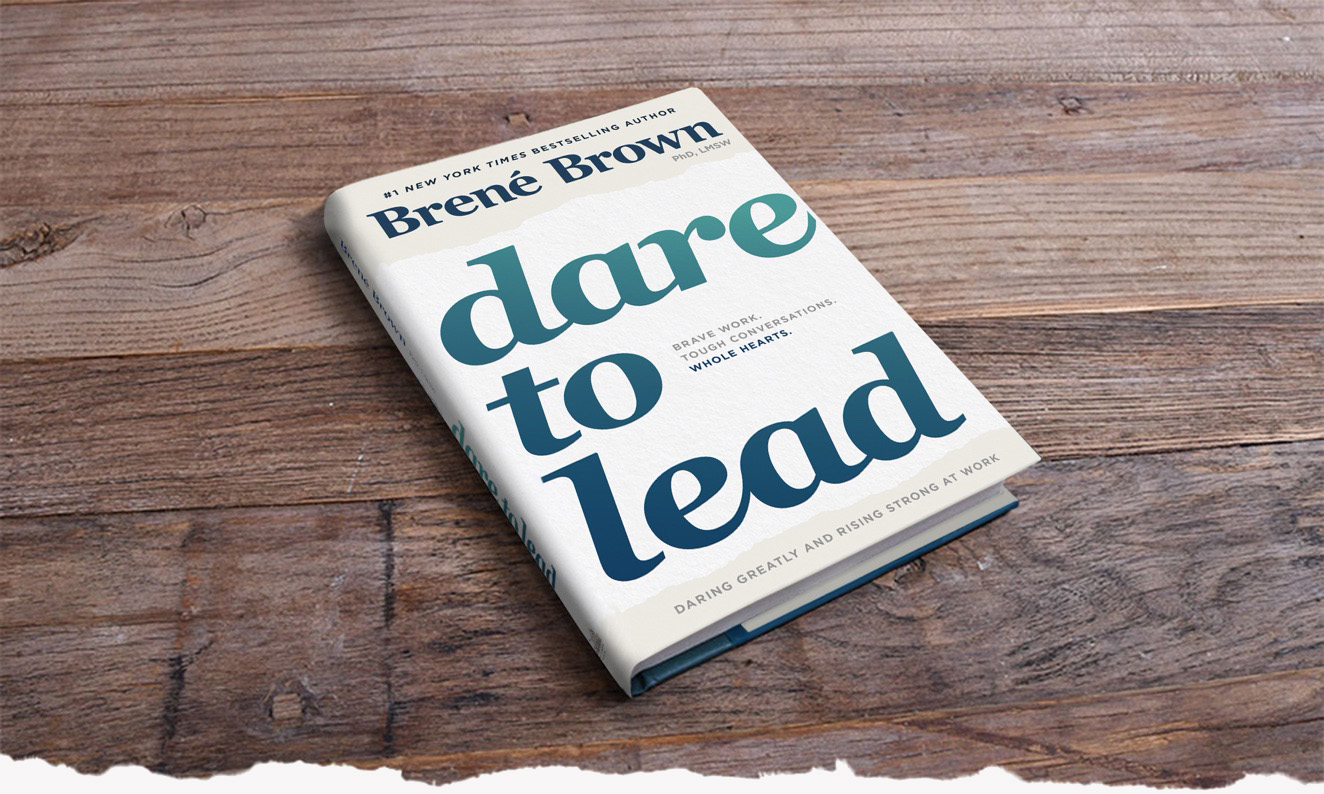
Dare to Lead

By Karen Lehman

As a way of getting to know each other, learning to work together and building a culture of trust, the staff in the MHS Goshen office decided to start a book club.  You simply can’t go wrong if your first book in your new book club is the national bestseller, Brené Brown’s Dare to Lead!

We barely got started reading Dare to Lead when everything in our country shifted and changed due to COVID-19.  The idea of spending time discussing a book felt frivolous to me and for the first weeks into our decision to work from home, I found it hard to concentrate on anything that required a great deal of processing and detail. 

Now in the fourth week of home office and the mandatory stay at home order, it is clear that there is no going back to how it was.  For the foreseeable future, our way of work and our very way of living is not going to go back to “normal.”  With that awareness and acceptance, the question now is how to live and work within these parameters?   

In order for us to have any sense of connection with each other as people, to grow as a team, and to interact as colleagues, we need to find virtual ways to have meaningful conversations, interaction and discussions.   So the MHS team had our first virtual book club discussion and while we’re learning how to navigate using a workbook along with discussion, we know that this way of connecting is going to work for all the purposes that I mentioned; to know each other better, to learn to work together and to build a culture of trust.  When we selected Dare to Lead we had no idea how perfect this book would be for this time of uncertainty, risk, emotional exposure, vulnerability and courage. 

A book club is just one idea for building a cohesive team.   It is not as much how you work at team building, it’s that you’re always working on it in one way or another.  Those of you working on the front lines of this pandemic are, by the very nature of your work, demonstrating courage and vulnerability, cornerstones for building trust within your teams.  For the rest of us, we’re needing to be a bit more creative in finding those ways of connecting and relating.   I encourage us all to find the ways that can work for you – and find hope and joy in doing it!

Find more information at Brené Brown’s Website.

Categories
2020 April

Slack is Anything But

By Twila Albrecht, Member Services Associate

Twila Albrecht

In response to stay-at-home orders, MHS staff have taken to their bedrooms, back porches, and basements for work. As for me, my living room has been transformed into an office complete with a standing desk, two monitors, and all of my two files from the MHS office.

I feel fortunate that I have everything that I need to do my job well from home.

I feel fortunate that I have a job.

And, despite the anxiety that accompanies this crisis, I’m grateful for a team that quickly embraced the necessary changes. While some MHS staff typically work remotely, our office adopted some additional tools to help us navigate the unforeseeable future.

In addition to more frequent Zoom meetings, our team adopted Slack – a digital workspace that allows teams to chat, share files, create various channels for projects, and connect email and calendar notifications. We can also create custom emoji’s, which, quite frankly, is really cute and fun.

Yes, I do miss being in the office with my co-workers. Yet, Slack has been an awesome resource for us, and there are so many aspects of it that we have yet to tap into. It’s a tool that we’ll continue to use even as we change our status back to “in the office.”

Slack goes beyond serving as an infrastructure for communicating remotely. As their blog makes evident, team building isn’t just an aspect of their work, it’s at the center. I’ve enjoyed some recent articles, and would encourage you to check them out as a resource for your team!

Categories
2020 April

CARES Act – Paycheck Protection Plan (PPP) Update

This update follows MHS attendance at a meeting held April 21 by MHS sister health & human services association, the Jewish Federation, at which Senator Marco Rubio provided updates on the Paycheck Protection program loans. 

On Tuesday, the Senate approved an additional coronavirus relief package, which provides $310 billion more in funding for the Paycheck Protection Program. The bill is expected to be signed into law later this week. Senator Rubio estimates the actual need to be upwards of $1 trillion. The proposed second round extension is unlikely to meet the totality of this need. It is possible that a third round of funds may be approved in the future.

As most banks have learned how to process the Paycheck Protection Program loans, we can anticipate that this loan process will move more quickly than the first round.

If you did not receive first round funding and/or have not heard from the bank on your loan application:

  1. Contact the individual you normally do business with at your bank and ask them to advocate with the SBA loan department for you.
  2. Ensure that your loans are complete with all necessary documentation. 
  3. Check with the bank to make sure your loan has moved to underwriting and will be processed now. 

For more information on how to apply, please visit www.mhsonline.org/nonprofit-loans/cares-act. Paycheck Protection Program loans are intended to prevent layoffs and keep small businesses solvent.

Categories
2020 March COVID Updates

COVID-19 Update on access to high demand supplies like PPE

As a member of MHS you have access to our group purchasing program, CPS, with access to discounts on thousands of services and supplies. Please click here for CPS’s March 25 COVID-19 Update on their access to high demand supplies like PPE. For more information on CPS contact Clare Krabill, MHS COO at clare@mhsonline.org or visit the CPS website at carepurchasing.com.

Categories
2020 March

Challenging Ourselves to See the Possibility of Abundance in This Difficult Time

Karen Lehman, President/CEO

by Karen Lehman, President/CEO

We are in uncertain and challenging times when access to news and information is constant. Daily, if not hourly, new directions are given and different decisions need to be made. Questions regarding enough staff, enough supplies, enough information, and are we doing enough are the new normal. In the midst of all of this, it’s easy to focus on the challenges, our fears and anxieties, and about the possibility of not having enough resources to see us through to the other side.

But the truth is, in our faith-based, values centered and networked organizations, we have so much strength and positivity on our side!  While it’s hard to remember the strong foundations of support we have when the day to day is so challenging, it is just that underpinning that will see us through this uncertain time.  And maybe challenge ourselves to see the possibility of abundance in this difficult time.   The question I am asking myself, and I’m guessing everyone is asking – what are my priorities today and what is the most important work I should do today or tomorrow? 

While the present is constantly at the forefront, thoughts about the future are there too.  What are the implications of the coronavirus outbreak for the future?  Am I doing what I should today to ensure a positive future for our organization and community?   While the primary focus right now is on resident/client/patient care, and ensuring our staff are safe and healthy, it doesn’t mean that our communications, fundraising, marketing, public relations, etc., should take a back seat. 

Our reputations, how we’re handling the coronavirus and how we’re treating all those in our care are all being measured each day.  Your stakeholders are paying attention!    One of the greatest resources an organization can have is a good reputation that only keeps improving as you handle difficult times.  Maintaining or increasing communications with your stakeholders and donors is more critical now than ever – sharing your preparation, your hard work and how you are maintaining your faith and values are very important to highlight.     

I am reminded of the words in Jim Collins’ Good to Great about how there are enduring great companies that face challenges.  “They all have ups and downs. The critical factor is not the absence of difficulty but the ability to bounce back and emerge stronger.”  This means taking the long view and considering how your decisions today will positively shape your future.  It’s viewing the world from a perspective of abundance, of having a strong foundation that will move you through adversity in a thoughtful strategic way.   

There is abundance to be found when we look for creative solutions to problems.  There is abundance to be found in acts of kindness and generosity when stress levels are high. There is abundance in the courage of the frontline staff and to all who are working with those who are sick and/or afraid. There is abundance in the energy, peace and wisdom that can emerge when we rely on our faith. There is abundance that can spring from thankfulness in the midst of all of our uncertainty.  There is abundance in knowing that we are all here for each other as members of our faith-based association. We are never alone! 

Design a site like this with WordPress.com
Get started