Categories
2020 July

The Board’s Role in Fundraising

Things to Remember:

  • The number one reason why people do not donate to an organization is that they are not asked to do so. (Faith-based organizations — churches, etc. — receive 32 percent of all giving because they ask for donations every week.)
  • Involvement invites investment.
  • The board must role model giving behavior for other prospects and donors to follow.
  • All fundraising is local. (Ensure your board represents your geography/service area, the major employers in your community, your legislative districts, etc.)
  • You may need to teach philanthropy before you can fundraise.
  • No organization owns a donor.
  • No donor gives away his or her last $500 (or $5,000).
  • You seldom get more than what you ask for.
  • Fundraising is about building and maintaining relationships — it is a marathon, not a sprint.
  • It’s much easier to get more money from an existing donor than $1 from a non-donor.

Board member activities – What you can do:

  • Cultivate ten new friends each year.
  • Send a letter to suspects/prospects in your community.
  • Call donors to thank them for their gifts. (Donors want prompt acknowledgment of their gift, confirmation that their gifts have been set to work as intended, and measurable results showing what effect their gift has had.)
  • Drop a personal note to lapsed donors.
  • Identify prospects for cultivation events.
  • Donate to the best of your ability.
  • Identify and recruit future board members who are willing to fundraise.
  • Speak frequently about your organization and its programs and purpose. (Chuck provides a worksheet on how to articulate the value your organization brings to its community in the session materials linked below.)
  • Accompany staff on solicitation/cultivation visits.
  • Join your bequest society and provide a testimonial.
  • Identify potential corporate donors.

Other tidbits:

  • Assess your board’s fundraising culture — Chuck provides an easy-to-use tool in the session materials — then create and support a culture of fundraising.
  • If you have a board member who is not willing to cultivate and steward gifts within his or her network, he or she should not be on the board. Having the right board is critical for effective fundraising.
  • Place fundraising on all of your board meeting agendas to discuss accomplishments and challenges. Publicly acknowledge board members involved in the process.
  • Ensure adequate staff support and staff resources for successful fundraising.
  • Include fundraising education in your board development activities.
  • Have all board members sign a board expectations statement that includes fundraising expectations, which should not be give get, but rather give and get.
  • The development committee’s role is help the staff engage the full board in fundraising — not to handle all of the board’s fundraising responsibilities.
  • Board members can be great fundraisers and never ask for money. Ninety percent of fundraising work is cultivation; 10 percent is ask.
  • Only way to grow your fundraising is to through donor retention and stewardship.
  • Donors worried about giving large gifts to young organizations without a history can set their money aside in donor-advised funds with community foundations, with instructions on how the money should be used if the organization fails.
  • Every well-established organization should have a planned giving program and “Make a bequest now” button on its website.

Chuck Loring, CFRE, senior governance consultant, from a 2017 BoardSource Leadership Forum
Categories
2021 July

Keep your community safe: Emergency Preparedness

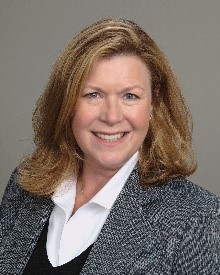
Dianne Piet

Do you know your disaster risk? Natural disasters, such as hurricanes, wildfires, and tornados, are more likely to happen in certain geographical locations because of weather patterns and regional characteristics.

Are you prepared? Your community likely has an emergency plan in place to keep your residents, staff and structures safe, but it doesn’t hurt to review the essentials and make sure you have the right items on hand for the most common natural disasters in your region.

Care Purchasing Services (CPS) partners with a wide range of vendors to help you prepare for, respond to, and recover from any type of emergency. Click here to download the latest CPS Emergency Preparedness guide.   If you have any questions, contact Dianne Piet, your dedicated CPS Client Account Manager, at 603-935-7923, email: pietdianne@carepurchasing.com.

Categories
2021 July

Your Words Responses for July 2021

What is the best lesson you’ve taken away from meeting in virtual formats?

That I really miss meeting in person. More challenging to pull yourself away from the the usual daily tasks when Zoom meeting in the office.

Delvin Zook, CEO of Rock of Ages Mennonite Home

First I will say being in person is always better, however with the lessons learned, virtual is our new norm, gone are the days of phone calls when we can virtual see and work together, better engagement every time. Great question!

Dianne Piet, Client Account Manager for Care Purchasing Services (CPS)

Meetings are more efficient as there’s less socialization – good and not so good…

Deanna S. Beins, Administrator of Menno Haven Rehabilitation Center

That it helps to remember engagement virtually is just as important as in person. People can tell when you’re multi-tasking!!

Karen Lehman, President/CEO of MHS

We can learn to adapt well to virtual meetings when required; however, I feel a stronger affinity for this physical presence now. Something is definitely gained when we are together and can experience the intricacies of human interaction in all its forms.

Curt Stutzman, President & CEO of Messiah Lifeways
Categories
2021 June

Dreaming of Post-Pandemic Normalcy, So Why Am I Feeling Tired & Anxious?

Karen Lehman, MHS President/CEO

by Karen Lehman, MHS President/CEO

Burnout, exhaustion, stress, anxiety, depression or just an overall blah feeling are real issues that many of us are experiencing right now.  As pandemic restrictions are starting to lift and there is movement toward normalizing our lives again, many of us are dreaming about gathering with family and friends and doing other activities that we love.  We should be excited to return to our “normal” activities, but instead, many of us find ourselves unable to shake off the feelings of anxiety, stress, and depression.  The pandemic upended our lives and changed everything about the ways that we related and behaved, it’s no wonder there is real trauma that many are experiencing as a result. 

As a leader, this past year has required constant vigilance and diligence:

  • Navigating regulations and mandates
  • Keeping residents, those served, and staff safe 
  • Shutting down homes, programs and communities
  • Restricting families from gathering with loved ones, etc. 

And now, there’s a sense that there is a need to make up for the lost time on our strategic focus.  The business needs leadership’s focus now more than ever, but the inspiration and challenge looking toward the future may not be as apparent as it once was.

Your front-line employees take the brunt of many of the problems or challenges that your organizations face.  Residents, individuals served, and family members usually take out their frustrations on the people that they see and know.  Besides the constant vigilance and new policies/procedures they experienced, direct care workers are most worried about jeopardizing their own health, their family’s well-being, and the challenge of work demands and home balance.  And many have had personal loss from Covid-19 or have experienced loss of residents or individuals that they served.  It’s been an incredibly challenging time for your staff with little end in sight.

More people than ever are re-thinking their work, considering their passion and commitment, and asking hard questions about the risks and rewards of working in the health and human services industry.  Is it worth it?  These are tough questions, especially in this time when you need all the staff you can get and don’t want to lose those you have. 

So, what are the solutions or way forward from all of this?

After reading a lot of articles and seeking wisdom from experts, I think the first step to take is to name what you are feeling.  This seemingly simple act has been shown to rebalance your brain’s neurochemical activity to allow you to engage in better problem solving. Then assess your life and work patterns.  If you haven’t taken time off to rest deeply and recharge, consider doing that.  Or find new ways to refresh and/or set greater boundaries for work/life balance.  For leaders, the organization needs you to be in your best health – you are the role model and example for the organization.  Taking care of yourself might mean a medical or physical check-up and talking to a professional if deeper support is needed.  Exercise, rest, healthy eating, and permission to take care of yourself, because if you don’t, nothing else you do is going to matter.  Recharging yourself can re-set your commitment and passion for the work you do.  Maybe you need to reconsider how you are working and develop new strategies for building the team and for invigorating the vision for the future? 

It is much easier for an executive to get away from the work setting, and so much harder, if not almost impossible, to provide the same kind of opportunity for front-line staff to do the same.  But if you have staff leaving because of burn-out, loss of passion for those being served, tired of working overtime, and prolonged time in trauma-producing settings, you are perpetuating your cycle of recruitment and retention.  Keeping good team members is the most important thing you can do! 

Last week in a CEO networking meeting, Loralei LaVoie from Oregon Mennonite Residential Services (OMRS), shared a recent experience with a staff member resignation.  Loralei immediately reached out to the staff member to learn why they were resigning.  Upon hearing that it was due to burn-out and exhaustion, Loralei agreed to take the staff person off the schedule and gave them a number of days off.  She asked the employee to consider waiting to resign until after time away.  And at the end of those days away, the employee did not resign but returned to work more refreshed.  This required Loralei and the team to work hard on covering those shifts, likely other staff had to work overtime to accommodate them, but she saved an employee from resigning!

The best thing we can do is to recognize and honor the varying perspectives or situations that people today are feeling.  There are many ideas and potential “solutions” that can be offered in order to begin to restore ourselves, and our team members.  Maybe it’s as simple as taking the time to give voice to and acknowledging the feelings, and, like Loralei, offering new solutions or options for consideration. We’d love to hear your stories about how you are navigating this time. MHS is here to support you, our members, in any way that we can.  Collecting and sharing your stories is a wonderful way for us to learn from each other as we continue to fulfill our mission and purpose.

Categories
2021 June

Four Qualities for Stronger Governance

by Clare Krabill, MHS COO

“If only I knew then what I know now.” This is something we all tell ourselves at some point in our leadership journey. Most likely, at many points along the way!

When I was 36, I began my first tenure on a board of directors and at 42, I moved into my first role as an executive director of a small non-profit. Through the wonders of 20-20 hindsight, I can easily see now how little I understood in those early years about board governance. Through the same lens, I am able to appreciate some foundational qualities that I already possessed and leaned into. It is also apparent to me how important it is both as a board member and as a non-profit leader to continue developing these.

Perhaps you are early on in your own governance journey as a board member or an organizational leader. Perhaps you have decades under your belt. No matter your length of service, good governance is essential to a strategically focused, fiscally stable, and mission focused organization. Alternatively, poor governance can sink the ship. I have witnessed people at all stages of experience demonstrate the spectrum of good to poor governance practices. We all know which side of the fence we would like to be on.

There are some great tools and resources for board governance best practices. MHS offers many resources! While tools and resources are valuable, the difference between a healthy, dynamic board and a poorly functioning one can be found in the quality of board interaction and engagement. As you consider your board, are these qualities evident?

  1. Curiosity. Are you creating space to wonder? Is there a vision for the future? What is happening in the world around you and in the industry? What do you want to learn? Where can you find new ideas? Does your board devote time to identifying knowledge gaps and a pathway to learn?
  2. Faith. Non-profit, mission focused work, especially in the health and human service industry, typically involves high stakes for those you serve. There is obvious potential for stress. Leaning into your faith can add perspective to your work. It can also provide essential focus to your vision. How does your ministry’s vision, programs, successes and failings fit into the arc of God’s eternal kingdom? What is your responsibility and what is God’s? How is faith incorporated into the meetings and work of your board?
  3. Servanthood relationships. Prioritizing, seeking to serve, and engaging respectfully with your constituents: board members, employees, clients, donors, and constituents is essential to your ministry. Are your organization’s values in regards to relationships reflected in your organization’s and board’s policies and procedures as well as your values statements? Do you have processes in place to regularly seek input and feedback from your constituents and peers? If so, are you transparent with the results and do you develop and implement an improvement plan when warranted?
  4. Humility. Curiosity, faith and relationships are all made stronger through humility. Frequently, if one is struggling in any of these areas, a lack of expressed humility can be a root cause. It has been my experience that while at times, a lack of humility can be indicative of over-confidence, it is more frequently caused by guardedness protecting an area of hurt or shame.  When you encounter a lack of humility in yourself or others do you first approach it with grace?  Does your board model humility to each other, the staff and your broader constituency?  If yes, how does this make your organization stronger? If this is not an area of strength, where can you start building humility as a value?

Good non-profit governance incorporates self-reflection, intentionality, strategy, perseverance, and commitment. The rewards are a more wholistic and healthy community. Blessings to you in your important and meaningful work! MHS is here to support you. Let us know how we can help.

Categories
2021 June

Wishing Twila All the Best

After more than three years with MHS, Twila Albrecht, Program Manager, will be leaving to pursue a Masters in Conflict Management at the Joan B. Kroc School of Peace Studies at the University of San Diego in California.

If you haven’t interacted with Twila directly, you almost certainly benefitted from her prolific work at our organization.

Notably, Twila developed and hosted our on Leading video podcast. She also developed the Employee Engagement evaluation.

Twila managed and made improvements to the Board and CEO assessments, and if you’ve received a survey from MHS in the past 3 years, chances are Twila wrote it. Webinars were produced and organized by Twila as well.

In addition to all of these tangible resources and assets, Twila also provided counsel on facilitation techniques and group dynamics. We will miss Twila’s many gifts, and wish her well in this next stage of her professional development.

Categories
2021 June

Your Words Responses for June

Who is your favorite professional development author?

Richard Rohr and/or Brian McLaren

Timothy Weaver, Chaplain at The Community at Rockhill

John Maxwell

John C. Maxwell, Founder-Author at Injoy Services

Stephen covey

Dennis Koehn, Principal at Koehn Consulting

Douglas Stone and Sheila Heen (Thanks for the Feedback)

Evie Telfer, Residential Living Pastor, Assistant Director of Pastoral Ministries at Messiah Lifeways

I love Brené Brown’s work! Her wisdom works for personal and professional.

Karen Lehman, President/CEO at MHS

Chip Heath

Nick Hankins, CEO at Upland Manor
Categories
eConnections

New CEO Roundup

Photo by Jamie Street on Unsplash
Marcy Johnson, CEO of Prairie View Inc.

Marcy Johnson began as CEO at Prairie View Inc. on May 5. Johnson comes to Prairie View from Mirror Inc. where she served as the Vice President of Treatment/Chief Clinical Officer.

She has over 18 years of experience in behavioral health, with 13 being in various clinical and leadership roles within Community Mental Health Centers in Kansas.

Johnson says, “I want to take Prairie View forward as not only an educator but as a responder, setting the stage for best practice as community mental health partner.”

We welcome her to the MHS family.

Michelle Rassler, incoming CEO of Frederick Living

Michelle Rassler will begin as CEO at Frederick Living on June 28. Rassler currently serves as the Vice President of Landis Communities and Executive Director of Landis homes.

 “Frederick Living is blessed to welcome Michelle Rassler as our next CEO,” Frederick Living’s Board Chair Warren Tyson said.  “The Board was particularly influenced by the very clear way in which she connects with our mission through her faith.”

“I am grateful God has directed my path to Frederick Living,” Michelle said. “A community so close to my heart. I look forward to working collaboratively towards a successful future.”

Kelley Laswell has been announced as the new CEO at Parkside  homes. She brings a variety of experiences to her position from completing two Administrator-in-Training programs, completing a divestiture in Minneapolis, KS, and being a Licensed Administrator in both Kansas and Iowa. She obtained her Masters in Health Care Leadership and Business Administration from Friends University, and her Undergraduate is a Bachelor of Arts in Psychology from Wichita State University.

Kory Baker is the new Administrator at Fairview Fellowship Home.

Categories
2021 May

Equipping Leaders to Sustain Anabaptist Values

By Mim Shirk, President/CEO, Anabaptist Providers Group

Leaders of Anabaptist nonprofit organizations are responsible to maintain organizational cultures that align with the organization’s mission and values. Regardless of how familiar the leaders are with Anabaptism, keeping mission and values alive happens only with intention.

Here are three ways organizations can equip leaders for an Anabaptist values-driven culture:

  1. An organization where I serve on the board noted our market had shifted from serving mostly Anabaptists and many employees come from non-Anabaptist backgrounds. We felt good about our mission and values statements, but we wondered if there is a shared understanding of what we intend those values to look like in our day-to-day operations. The board took the lead in crafting a document that linked key policies and practices to our values, institutionalizing “why we do things this way.
  2. In this tight labor environment, retaining good employees is a priority. Anabaptist organizations committed to valuing others can be explicit in inviting team members’ input, leading to new insights or flexibility that make people want to stay. Leaders who do this regularly create a culture of participation that makes team members feel valued.
  3. Make leadership development an ongoing practice as part of operations. When a team is making an important decision, bring out the values statements. I know one organization that has a core value of kindness. How would using “kindness” as a lens shape a decision to lay off staff or relocate a group of residents? This is an opportunity to practice with emerging leaders about relying on values when making hard decisions.

In Matthew 5 – 7, the Sermon on the Mount contains Jesus’ instructions to his disciples. It’s a comprehensive overview of Christ-centered living. The passage ends with these verses: “24 Anyone who hears and obeys these teachings of mine is like a wise person who built a house on solid rock. 25 Rain poured down, rivers flooded, and winds beat against that house. But it did not fall, because it was built on solid rock.” Matt. 7:24-25 Mission and values are the solid rock that organizations are built on. Used regularly, they can be a valuable resource for leadership development.

Categories
2021 May

Be part of the Safer in Senior Living Movement

Webinar: Wednesday, June 16, 2021 @ 2:00 pm CST

CPS logo

Safer in Senior Living was launched on May 1, as a new initiative to promote the benefits of senior living communities. The COVID-19 pandemic fundamentally changed how senior living is perceived resulting in record low occupancy levels, a drop in public confidence, and fewer seniors considering communities. 

The expectations for a senior living organization have changed overnight. Seniors and their families need to know that they will be safe and taken care of. They need to be assured that the industry is agile and shifting to address the new challenges brought about by the pandemic. It’s vital that the voice of senior living is heard, and the real stories are told beyond the walls of close-knit industry. 

Please join us on June 16, at 2:00 pm CST for a live webinar sponsored by CPS and VirtuSense Technologies as we discuss:  

  • The reason behind the decrease in occupancy and ways to increase census
  • Why the FCC is funding hundreds of millions of dollars for healthcare technology solutions
  • Give an overview of Safer in Senior Living

Safer in Senior Living will share the common, real world stories from communities across the U.S., focusing on the health and prosperity of older adults both during and after the COVID pandemic. We want to celebrate the big and little accomplishments and let the world know that older adults really are safer in senior living than at home, and in turn, help to boost occupancy in senior living communities. 

Register for the webinar here.

Please visit saferinseniorliving.com to get your community involved in the campaign and help us spread the word. Together, we can make our voices heard. To begin your participation, download the guide. If you have any questions, contact Dianne Piet, your dedicated CPS Client Account Manager, at 603-935-7923, email: pietdianne@carepurchasing.com.

Design a site like this with WordPress.com
Get started