Categories
2021 August

A First-hand Look at a Risk Manager’s Role

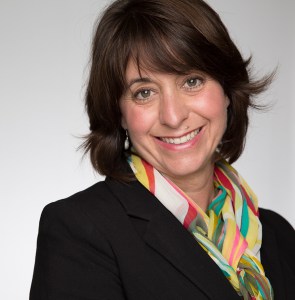
Arielle Schultz, Compliance and Risk Manager at Mennonite Village

MHS interviewed Arielle Schultz, Compliance and Risk Manager at Mennonite Village in Albany, Oregon to give our readers a first-hand look at the experiences of a risk manager.

Share how you came to the role of Risk Manager at Mennonite Village.

I worked at the Mennonite Home as a CNA/Team Leader in the rehab unit for roughly 4.5 years as I was going through school. During these years I received my Associate of Arts degree from the local community college then changed my major from nursing to communications and enrolled at a university about 40 minutes away. I spent two years driving back and forth from work to class working extremely modified shifts to make my educational dreams happen. After I graduated with my Bachelor of Arts in communication with a minor in Spanish, I continued working as a CNA for another 2 months when the position as Compliance and Risk Manager became available. At the time, my staffing coordinator, called me and urged me to apply. It was a quick turn around from that conversation and within a few weeks I had two interviews, both while still wearing my scrubs, and was offered the position.

What have been the greatest challenges in your role and work that you’ve had to overcome?

The greatest challenge for my role has been advancing this role from a nursing-based risk management position to a campus wide risk management and compliance one. I do not think the rest of campus knew what to think of this new role stepping into their territory, and unfortunately it was met with some resistance at first. It took time to relay to all the departments that my role was here to be a support and not a replacement to any of their existing staff. I was able to find my way into these groups to where they saw me as an asset and not a hinderance. Once this position truly became a campus wide role, I was able to bridge the gap between the departments since I attended such a variety of meetings and was part of most departmental committees. This change also brought the ability to increase consistency across departments, in minutes, trainings, and processes. These were hurdles at the time, but well worth the time and energy to get there.

Share a positive highlight, achievement or something you are proud to have accomplished in your role.

I am very proud of the educational components of my role that have been streamlined. There are more campus wide trainings on our campus than ever before. We now have a campus wide compliance, risk management, HIPAA, setting realistic expectations, and fair housing trainings that are given to all staff. The formatting is consistent, all staff receive the same information, and all the requirements are streamlined for effectiveness. I feel that we are able to now show accountability for these trainings, and that staff truly learn something throughout the process. I make sure to update each training annually with new examples and statistics, which I feel makes for a strong level of engagement.  

The Risk Manager role comes with great responsibility, share how you are able to work within the team at Mennonite Village to ensure there is a culture of safety.

This has been a difficult challenge over the years, but slowly has gotten easier with each year that has gone by. I think that the best way to try and ensure a culture of safety is to be open and transparent about the issues and concerns on your campus, and then offer suggestions and training that can be easily relayed to all staff. I think when staff feel they can see a clear view of the concerns then they are more apt to be engaged in the process of trying to correct them. Finding a way to increase consistency across campus only helps the process. It is great to see staff from across our campus have the same understanding of key risk management processes and that reporting concerns ultimately leads to less work for them and a safer environment for the residents.

Understanding that you work with the Peace Church program, share how their resources and services support you in your role.

It has been great having the resources from the Peace Church available, especially ECRI. Knowing that there are resources available so that you do not always have to start from scratch is a nice comfort. Also, the continued number of pertinent webinars cannot go unnoticed either. It is great to use such a vast variety of resources to educate our campus and stay up to date on current trends in risk management.

Anything else that you would like to share with MHS members about the risk management role at Mennonite Village?

With every role, consistency is key and sometimes that results in some uneasiness when departments have been doing the same thing for years. Getting buy in from multiple departments and developing one plan that works best to satisfy the needs of all departments is a difficult road, but the best one to go down. Being a risk manager is a tough role, but if you are diligent, focus on doing the right thing, and remain approachable, it will only align to make your job easier to navigate and better for the community overall.

Categories
2021 August

Your Words Responses for August 2021

What’s your happy place?

Sitting on the beach in Hilton Head, South Carolina watching the waves crash.

Jerry Lile, CEO of Fairmount Homes

Lido Beach

Leland Sapp, CEO of Peaceful living

My happy place is seeing an organization achieve it’s mission and strategic initiatives!

Allon Lefever, Board Chair of Landis Communities

With my family, wherever that may be!

Jennifer Schwalm, Partner with Baker Tilly

The beach with sand, a book, and my husband

Christa Held, Director of Donor Engagement with Peaceful Living

Cedar Brook

Roberta Linscheid, Executive Director of Sierra View Homes

Being with my husband and daughter.. preferably on vacation!

Arielle Schultz, Risk Management and Compliance Director at Mennonite Village

Devotions

Randall W Gasser, Executive Director at Woodhaven Retirement Community

The utter privilege and blessing of relating with residents and reflecting together on the journey!

Randy Murray, Chaplain at OrrVilla Retirement Community
Categories
2021 August

The Board’s Role in Risk Management

by Karen Lehman

What is the role of the Board when it comes to risk management?   There are several reasons why a governing Board needs to pay attention to issues that relate to organizational risks;

  • It is the Board’s responsibility to ensure effecting planning for all of the programs and service lines of the organization, including the awareness of where the organization may have its greatest liability risk and ensuring there is protection or safeguards in place, 
  • Overall protection of the organizations assets and resources requires a solid risk assessment and plan,
  • And finally, the Board’s ultimate responsibility is to ensure the legal and ethical integrity of the organization which can only be done through a robust and thorough risk management program. 

For a full review of the Board’s role in risk management, please see the BoardSource resource that is available to you. One of the benefits of your MHS membership is being able to ask questions about governance related matters to MHS staff.  Send questions to Info@mhsonline.or

Categories
2021 August

Alisa Miller to Leave MHS and MHS Consulting

After more than eight years of service, Alisa Miller will resign as MHS Chief Financial Officer and MHS Consulting Managing Director, to pursue a new opportunity as CEO of Kairos Health Systems, a wholly owned subsidiary of LeadingAge PA.

Alisa joined MHS Consulting in January 2013.  In that role, she served MHS members and other clients by providing various consulting services.  In September 2014, Alisa took on the Vice President of Finance position with MHS.  In November 2017, Alisa was named the MHS Consulting Managing Director, balancing both roles for the last four years.

MHS President/CEO, Karen Lehman says, “I am deeply grateful for Alisa’s dedication and leadership to MHS throughout these years.  She’s been a great colleague and will be missed!”

Jarrod Leo, chairman of the Kairos Board of Directors says, “We are thrilled to welcome someone of Alisa’s caliber and experience to Kairos, and look forward to the opportunities that lie ahead under her leadership.”

Miller’s last day at MHS will be August 27, and she will be succeeded by Jeremy Kauffman, who has been with MHS Consulting since 2019. All of us at MHS and MHS Consulting wish Alisa the best as she moves into her new role and responsibilities. She will be missed.

Categories
eConnections

Upgrade Your Quality of Care with Obie, An Award-Winning Interactive Gaming System

CPS logo

Obie for Seniors is an award-winning interactive gaming system that offers meaningful play for seniors. Seniors engaged in high quality, active play-based experiences will feel better about their physical capabilities and improve their willingness to socialize.

97% of seniors using Obie show significant motoric improvement, Senior Care During Covid-19

Obie for Seniors is a high touch, high-technology, interactive gaming system that projects onto any surface – tabletops, floors, and walls – encouraging active play through touching, moving, and hand-eye coordination skills. The device uses sensors to identify movements and offers a suite of games to enhance movement, cognition, and social interaction.

Upgrade the quality of care for our residents by making a commitment to offering state-of-the-art technology. Obie for Seniors has received numerous awards for its innovative solution to enhancing quality of life for older adults, including first place in LeadingAge California’s 2021 People Choice Award, first place in the Mediterranean Towers Ventures’s Agetech ‘Startup of the Year’ Competition 2021, and others. Obie for Seniors technology by EyeClick is a new CPS vendor partner. Contact Dianne Piet, your dedicated CPS Client Account Manager, at 603-935-7923, email: pietdianne@carepurchasing.com, to begin improving your residents well being.

Categories
2021 July

Engaging Yourself and Others Missionally

by Clare Krabill

Engagement. It’s a buzz word we hear a lot lately. How do we engage our colleagues and keep them engaged? How do we engage our clientele in our services and our donors in our cause? How do we keep ourselves engaged in our ministry’s mission?

We ask these questions because we know engagement matters. Engagement is tied to employee satisfaction and retention. It is correlated to positive health outcomes for those we serve in the health and human service industry. It brings vibrancy to our ministries and success to our fundraising campaigns. It gives us energy and motivation in our own work and helps prevent burnout.

Yet, it can be elusive. Especially lately.

I was able to take a week of vacation recently. Somewhere around day 5, I came to a realization that has the power to drive my own engagement on multiple fronts. The steps by which this realization came to be are simple. They also take intention and time.

  1. Make space to reflect on your own or conversationally.
  2. Consider these pandemic months. What have you lost? What have you gained?
  3. What have you discovered matters to you? What doesn’t?
  4. When it comes to choosing how you will spend your resources of time, talent and money, what single thing is most important to you?
    1. Given that your time and life are precious, and not to be taken for granted, how can you use this thing as a litmus test for what you say yes or no to?
    2. How can this thing motivate you in your work, your relaxation and your relationships? How can you use it to serve God?
  5. How can you hold yourself accountable to living into this sense of purpose?

If you manage people, be curious about what is most important to them and how it can be harnessed and built upon to support your mission. If you fundraise, seek to discover what it is for your donors to bring about deeply meaningful gifts. Ask those you serve and look for big and small ways your organization and your daily work can help them live into their purpose. Seek clarity on what is most important to you. When you experience the engagement that comes from this, you may find yourself motivated to help others find it as well.

Understanding what engages you and others is powerful. Discovering what it is in others is relational. Connecting it to your ministry is missional.

Categories
2020 July

The Board’s Role in Fundraising

Things to Remember:

  • The number one reason why people do not donate to an organization is that they are not asked to do so. (Faith-based organizations — churches, etc. — receive 32 percent of all giving because they ask for donations every week.)
  • Involvement invites investment.
  • The board must role model giving behavior for other prospects and donors to follow.
  • All fundraising is local. (Ensure your board represents your geography/service area, the major employers in your community, your legislative districts, etc.)
  • You may need to teach philanthropy before you can fundraise.
  • No organization owns a donor.
  • No donor gives away his or her last $500 (or $5,000).
  • You seldom get more than what you ask for.
  • Fundraising is about building and maintaining relationships — it is a marathon, not a sprint.
  • It’s much easier to get more money from an existing donor than $1 from a non-donor.

Board member activities – What you can do:

  • Cultivate ten new friends each year.
  • Send a letter to suspects/prospects in your community.
  • Call donors to thank them for their gifts. (Donors want prompt acknowledgment of their gift, confirmation that their gifts have been set to work as intended, and measurable results showing what effect their gift has had.)
  • Drop a personal note to lapsed donors.
  • Identify prospects for cultivation events.
  • Donate to the best of your ability.
  • Identify and recruit future board members who are willing to fundraise.
  • Speak frequently about your organization and its programs and purpose. (Chuck provides a worksheet on how to articulate the value your organization brings to its community in the session materials linked below.)
  • Accompany staff on solicitation/cultivation visits.
  • Join your bequest society and provide a testimonial.
  • Identify potential corporate donors.

Other tidbits:

  • Assess your board’s fundraising culture — Chuck provides an easy-to-use tool in the session materials — then create and support a culture of fundraising.
  • If you have a board member who is not willing to cultivate and steward gifts within his or her network, he or she should not be on the board. Having the right board is critical for effective fundraising.
  • Place fundraising on all of your board meeting agendas to discuss accomplishments and challenges. Publicly acknowledge board members involved in the process.
  • Ensure adequate staff support and staff resources for successful fundraising.
  • Include fundraising education in your board development activities.
  • Have all board members sign a board expectations statement that includes fundraising expectations, which should not be give get, but rather give and get.
  • The development committee’s role is help the staff engage the full board in fundraising — not to handle all of the board’s fundraising responsibilities.
  • Board members can be great fundraisers and never ask for money. Ninety percent of fundraising work is cultivation; 10 percent is ask.
  • Only way to grow your fundraising is to through donor retention and stewardship.
  • Donors worried about giving large gifts to young organizations without a history can set their money aside in donor-advised funds with community foundations, with instructions on how the money should be used if the organization fails.
  • Every well-established organization should have a planned giving program and “Make a bequest now” button on its website.

Chuck Loring, CFRE, senior governance consultant, from a 2017 BoardSource Leadership Forum

Categories
2021 July

Keep your community safe: Emergency Preparedness

Dianne Piet

Do you know your disaster risk? Natural disasters, such as hurricanes, wildfires, and tornados, are more likely to happen in certain geographical locations because of weather patterns and regional characteristics.

Are you prepared? Your community likely has an emergency plan in place to keep your residents, staff and structures safe, but it doesn’t hurt to review the essentials and make sure you have the right items on hand for the most common natural disasters in your region.

Care Purchasing Services (CPS) partners with a wide range of vendors to help you prepare for, respond to, and recover from any type of emergency. Click here to download the latest CPS Emergency Preparedness guide.   If you have any questions, contact Dianne Piet, your dedicated CPS Client Account Manager, at 603-935-7923, email: pietdianne@carepurchasing.com.

Categories
2021 July

Your Words Responses for July 2021

What is the best lesson you’ve taken away from meeting in virtual formats?

That I really miss meeting in person. More challenging to pull yourself away from the the usual daily tasks when Zoom meeting in the office.

Delvin Zook, CEO of Rock of Ages Mennonite Home

First I will say being in person is always better, however with the lessons learned, virtual is our new norm, gone are the days of phone calls when we can virtual see and work together, better engagement every time. Great question!

Dianne Piet, Client Account Manager for Care Purchasing Services (CPS)

Meetings are more efficient as there’s less socialization – good and not so good…

Deanna S. Beins, Administrator of Menno Haven Rehabilitation Center

That it helps to remember engagement virtually is just as important as in person. People can tell when you’re multi-tasking!!

Karen Lehman, President/CEO of MHS

We can learn to adapt well to virtual meetings when required; however, I feel a stronger affinity for this physical presence now. Something is definitely gained when we are together and can experience the intricacies of human interaction in all its forms.

Curt Stutzman, President & CEO of Messiah Lifeways
Categories
2021 June

Dreaming of Post-Pandemic Normalcy, So Why Am I Feeling Tired & Anxious?

Karen Lehman, MHS President/CEO

by Karen Lehman, MHS President/CEO

Burnout, exhaustion, stress, anxiety, depression or just an overall blah feeling are real issues that many of us are experiencing right now.  As pandemic restrictions are starting to lift and there is movement toward normalizing our lives again, many of us are dreaming about gathering with family and friends and doing other activities that we love.  We should be excited to return to our “normal” activities, but instead, many of us find ourselves unable to shake off the feelings of anxiety, stress, and depression.  The pandemic upended our lives and changed everything about the ways that we related and behaved, it’s no wonder there is real trauma that many are experiencing as a result. 

As a leader, this past year has required constant vigilance and diligence:

  • Navigating regulations and mandates
  • Keeping residents, those served, and staff safe 
  • Shutting down homes, programs and communities
  • Restricting families from gathering with loved ones, etc. 

And now, there’s a sense that there is a need to make up for the lost time on our strategic focus.  The business needs leadership’s focus now more than ever, but the inspiration and challenge looking toward the future may not be as apparent as it once was.

Your front-line employees take the brunt of many of the problems or challenges that your organizations face.  Residents, individuals served, and family members usually take out their frustrations on the people that they see and know.  Besides the constant vigilance and new policies/procedures they experienced, direct care workers are most worried about jeopardizing their own health, their family’s well-being, and the challenge of work demands and home balance.  And many have had personal loss from Covid-19 or have experienced loss of residents or individuals that they served.  It’s been an incredibly challenging time for your staff with little end in sight.

More people than ever are re-thinking their work, considering their passion and commitment, and asking hard questions about the risks and rewards of working in the health and human services industry.  Is it worth it?  These are tough questions, especially in this time when you need all the staff you can get and don’t want to lose those you have. 

So, what are the solutions or way forward from all of this?

After reading a lot of articles and seeking wisdom from experts, I think the first step to take is to name what you are feeling.  This seemingly simple act has been shown to rebalance your brain’s neurochemical activity to allow you to engage in better problem solving. Then assess your life and work patterns.  If you haven’t taken time off to rest deeply and recharge, consider doing that.  Or find new ways to refresh and/or set greater boundaries for work/life balance.  For leaders, the organization needs you to be in your best health – you are the role model and example for the organization.  Taking care of yourself might mean a medical or physical check-up and talking to a professional if deeper support is needed.  Exercise, rest, healthy eating, and permission to take care of yourself, because if you don’t, nothing else you do is going to matter.  Recharging yourself can re-set your commitment and passion for the work you do.  Maybe you need to reconsider how you are working and develop new strategies for building the team and for invigorating the vision for the future? 

It is much easier for an executive to get away from the work setting, and so much harder, if not almost impossible, to provide the same kind of opportunity for front-line staff to do the same.  But if you have staff leaving because of burn-out, loss of passion for those being served, tired of working overtime, and prolonged time in trauma-producing settings, you are perpetuating your cycle of recruitment and retention.  Keeping good team members is the most important thing you can do! 

Last week in a CEO networking meeting, Loralei LaVoie from Oregon Mennonite Residential Services (OMRS), shared a recent experience with a staff member resignation.  Loralei immediately reached out to the staff member to learn why they were resigning.  Upon hearing that it was due to burn-out and exhaustion, Loralei agreed to take the staff person off the schedule and gave them a number of days off.  She asked the employee to consider waiting to resign until after time away.  And at the end of those days away, the employee did not resign but returned to work more refreshed.  This required Loralei and the team to work hard on covering those shifts, likely other staff had to work overtime to accommodate them, but she saved an employee from resigning!

The best thing we can do is to recognize and honor the varying perspectives or situations that people today are feeling.  There are many ideas and potential “solutions” that can be offered in order to begin to restore ourselves, and our team members.  Maybe it’s as simple as taking the time to give voice to and acknowledging the feelings, and, like Loralei, offering new solutions or options for consideration. We’d love to hear your stories about how you are navigating this time. MHS is here to support you, our members, in any way that we can.  Collecting and sharing your stories is a wonderful way for us to learn from each other as we continue to fulfill our mission and purpose.

Design a site like this with WordPress.com
Get started